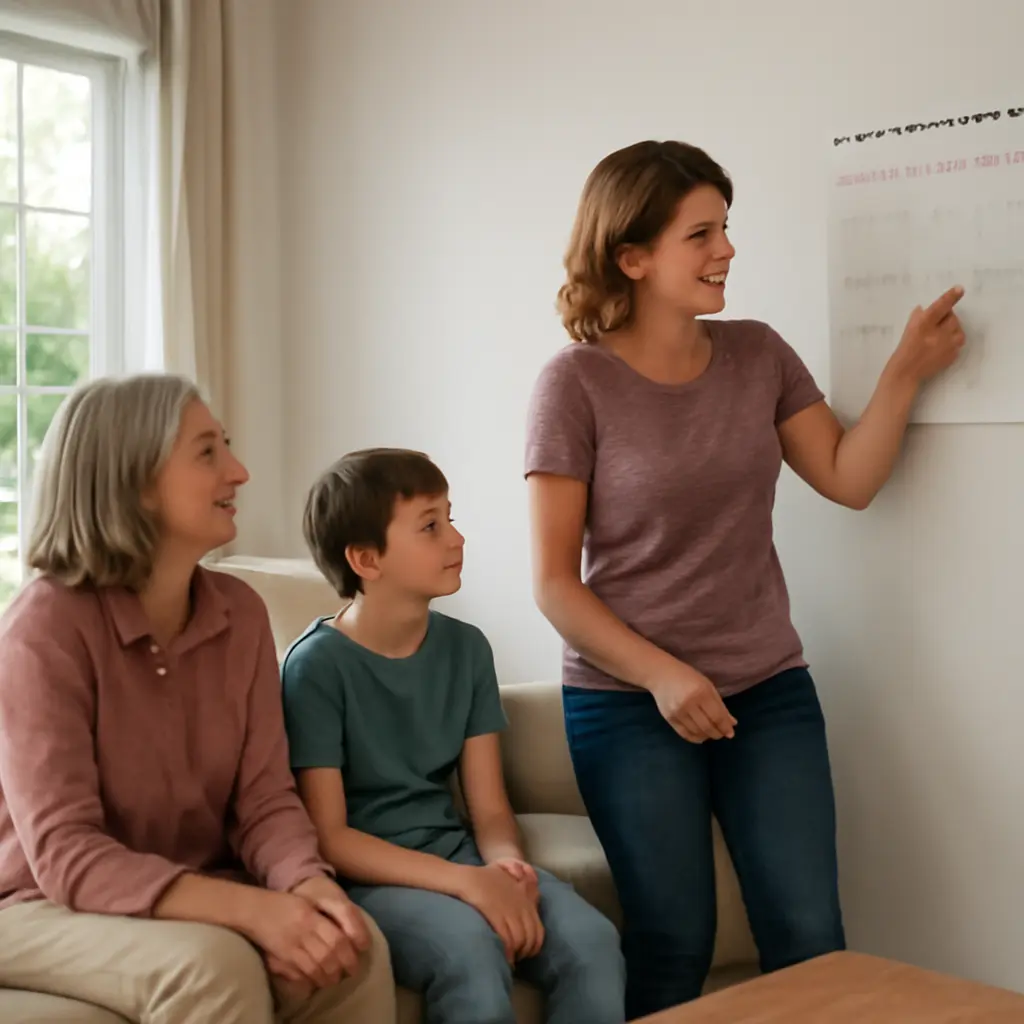
Multigenerational living is a household arrangement in which grandparents, parents and children share a home, often combining caregiving, expenses and daily routines. It can offer practical support, but it works best when relatives make privacy, responsibilities and decision-making explicit rather than assuming everyone has the same expectations. The arrangement is increasingly relevant: Pew Research Center reported that 59.7 million Americans lived in multigenerational households in 2021, up from 58.4 million in 2019. This guide explains the forms multigenerational households can take, how to establish boundaries and shared routines, and how to plan for money, caregiving and conflict.
Multigenerational households combine family support with shared responsibilities
A multigenerational household is a home where two or more adult generations live together. The U.S. Census Bureau commonly identifies such households by the presence of a householder and at least one adult relative who is not the householder’s spouse or unmarried partner. Family members may share a home because of housing costs, childcare or eldercare needs, cultural traditions, a life transition, or a preference for mutual support.
The arrangement is not a single fixed model. Pew Research Center’s 2022 analysis of 2021 Census data found that nearly one in five people in the United States lived in a multigenerational household. The figure includes many household structures, so it does not mean every home contains grandparents, parents and children at once. What these homes share is the need to coordinate space, resources and expectations across generations.
Common forms of multigenerational living
A “three-generation household” typically includes grandparents, parents and children. Other configurations include grandparents living with adult children but no grandchildren, or adult children returning to a parent’s home. Families may live in one shared dwelling, a home with a separate in-law suite, or neighboring units that make help convenient while preserving more independence.
Each form has different pressure points. A shared kitchen may require a meal schedule, while a separate suite may make visits and caregiving easier to plan. Before moving in, list who will live in the home, which areas are shared, and what each person expects the arrangement to provide.
Benefits depend on clear expectations
Living together can make childcare, transportation and everyday assistance easier to coordinate. It may also allow family members to divide housing costs or provide companionship. But proximity does not automatically create harmony: differences in parenting, housekeeping, privacy and money can turn useful support into repeated friction.
A practical starting point is to distinguish help that is offered from help that is assumed. For example, a grandparent may enjoy occasional school pickup without agreeing to be the regular caregiver. Naming that distinction protects the relationship and makes the household plan more realistic.
Household boundaries protect privacy and relationships
Household boundaries are shared agreements about privacy, access, roles and acceptable behavior. They are not punishments or barriers to affection; they clarify where one person’s responsibility ends and another’s begins. In a multigenerational home, boundaries are especially useful because family members may have different ideas about what counts as private space, helpful advice or appropriate involvement.
The American Psychological Association describes boundaries as limits that help people communicate their needs and maintain healthy relationships. Applied to family living, that means agreeing on practical matters before frustration builds: knocking before entering bedrooms, asking before inviting guests, and discussing parenting concerns privately rather than in front of children.
Create private space and predictable access
Privacy can be physical or social. Each adult should have a place to retreat, and children should also learn age-appropriate rules about knocking and personal belongings. If the home has limited space, families can still create signals—such as a closed door or a designated quiet hour—that mean “please wait unless it is urgent.”
Agree on access to bedrooms, bathrooms, phones and personal documents. Also establish visitor expectations, including advance notice, overnight guests and shared areas. Specific rules are easier to follow than a vague instruction to “respect privacy.”
Keep parenting decisions with the parents
When grandparents help care for children, everyone benefits from knowing which decisions belong to the parents and which routine choices a caregiver can make. Parents should communicate rules about food, screens, discipline, bedtime, medication and emergencies. Grandparents can raise concerns, but parents should make the final decisions unless a child faces immediate danger.
A useful approach is to discuss disagreements away from the children and use one consistent message in front of them. This avoids asking children to choose sides and prevents adults from undermining one another. The arrangement can still leave room for a grandparent’s traditions or special activities when parents agree.
Use family meetings to address friction early
A short, regular household meeting gives relatives a predictable place to discuss schedules, chores and concerns. Keep the conversation focused: identify the issue, describe its effect, suggest a change and agree on who will follow up. A weekly check-in may be enough at first, with less frequent meetings once routines settle.
For a real-world example, imagine a grandparent who repeatedly gives a child snacks before dinner. Instead of framing the problem as disrespect, parents can explain the impact, agree on a snack rule and invite the grandparent to choose an approved option. Specific agreements reduce blame and make cooperation easier.
Shared caregiving works best when duties are voluntary and defined
Shared caregiving is the planned division of practical and emotional support among relatives. It can include childcare, rides, meal preparation, help with appointments or assistance with an older adult’s daily needs. The key is to make responsibilities explicit, manageable and revisable rather than treating family availability as unlimited.
The scale of caregiving in the United States shows why this planning matters. AARP and the National Alliance for Caregiving reported in “Caregiving in the U.S. 2020” that about 53 million adults provided unpaid care to an adult or child with special needs. That national estimate is not specific to multigenerational homes, but it underlines how often families rely on unpaid help—and why caregivers need realistic limits and support.
Write down the caregiving plan
A caregiving plan records who does what, when, and under which conditions. For childcare, specify regular hours, backup arrangements, school pickups, emergency contacts and expenses. For eldercare, clarify appointment transportation, medication reminders, mobility assistance and which tasks require a clinician or trained caregiver.
The plan should distinguish routine help from on-call availability. A grandparent might agree to one afternoon of childcare each week but not be responsible for last-minute coverage. Put the agreement in writing, even if it is informal, and revisit it when work schedules, health or children’s needs change.
Protect caregivers from overload
Caregiver strain can show up as exhaustion, irritability, isolation or declining health. The National Institute on Aging advises caregivers to seek support, take breaks and pay attention to their own health. In a family household, that means sharing tasks fairly, arranging respite where possible and treating a caregiver’s need for rest as part of the plan—not as a failure to help.
Families can make relief concrete by naming a backup person, scheduling time off and identifying community resources. Depending on eligibility and location, options may include adult day services, respite programs, Area Agencies on Aging or support groups. Confirm services directly with local providers because availability and eligibility vary.
Respect the older adult’s autonomy
Support should preserve an older adult’s choices and dignity whenever possible. Ask what help is wanted rather than taking over tasks automatically, and involve the person in decisions about routines, visitors and care. If safety or decision-making capacity is a concern, discuss it with qualified health and legal professionals rather than relying on assumptions based on age.
A household budget and chore system prevent resentment
A shared household budget is an agreement about how residents contribute to housing, utilities, food, maintenance and other costs. Contributions need not be identical: a relative may contribute money, caregiving, cooking or transportation. The important point is that everyone understands the arrangement and sees it as fair enough to sustain.
The U.S. Census Bureau’s 2023 American Community Survey reported that the national median gross rent was $1,406 per month. This national figure does not describe every family’s housing costs, but it helps explain why sharing a home can be financially attractive. Savings, however, should be weighed against renovation expenses, added utility use and any effect on benefits, taxes or legal arrangements.
Agree on money before moving in
List recurring expenses and decide how each will be paid. Include rent or mortgage contributions, utilities, groceries, internet, repairs, insurance and shared supplies. Set due dates, identify who manages bills, and agree on how unexpected costs will be handled. If one person owns the home, clarify whether contributions are rent, shared expenses or something else; seek professional advice when ownership or tax consequences are unclear.
A simple shared spreadsheet or written agreement can prevent misunderstandings. Review it after the first month and again when costs or household membership change. For major renovations or long-term arrangements, consider advice from a qualified attorney, financial planner or housing professional.
Divide chores by ability, not age-based assumptions
A chore system assigns recurring tasks to specific people and sets a reasonable frequency. Avoid assuming that grandparents should provide childcare or that younger adults should handle every physical task. Ask about preferences, schedules and health limitations, then distribute work accordingly.
A visible list can cover meals, dishes, laundry, cleaning, yard work and shopping. Rotate unpleasant tasks when practical, and define what “done” means—for example, whether cleaning the kitchen includes wiping counters and putting away food. Clear standards reduce repeated reminders and arguments over uneven effort.
Plan for safety and home accessibility
A home shared by young children and older adults may need adjustments for different mobility and safety needs. The National Institute on Aging recommends measures such as reducing fall hazards, improving lighting and making frequently used items easier to reach. Families can also secure medicines and cleaning products, establish emergency contacts and discuss how to respond to a fall or other urgent event.
Walk through the home together and identify hazards without treating the older adult as a problem to be managed. Practical changes—such as grab bars, nonslip mats or clearer pathways—can support independence as well as safety. For significant mobility or medical concerns, consult an appropriate clinician or occupational therapist.
A written household agreement turns good intentions into routines
A household agreement is a plain-language record of expectations for money, space, caregiving, chores, guests and conflict resolution. It does not need to be a legal contract to be useful. Writing down decisions makes it easier to check what was agreed and adjust the plan without relying on memory or assumptions.
Start with a move-in conversation
Before anyone moves in, discuss why the arrangement is happening, what success would look like and how long it may last. Cover practical details such as keys, parking, meals, quiet hours, pets, smoking, visitors and storage. Make space for each adult to state what they need to feel respected and what they cannot take on.
Set a review date and a way to revise the plan
A plan should evolve as children grow, jobs change and health needs shift. Choose a review date—such as one month after moving in, then every few months—and ask what is working, what feels unfair and what needs to change. If conversations repeatedly become hostile or stuck, a family counselor, mediator or social worker may help relatives communicate more constructively.
Conclusion: Multigenerational living thrives on clarity, consent and flexibility
Multigenerational households can combine companionship, practical help and shared costs, but the benefits are not automatic. The strongest arrangements define boundaries, keep parenting roles clear, make caregiving voluntary and specific, distribute household expenses and chores transparently, and account for privacy and safety. National data show that this is a common and growing way of living, while caregiving research highlights the importance of protecting the people who provide support.
Before moving in—or if tension is already building—hold a family meeting and write down a realistic household agreement. Start with the arrangements most likely to cause stress, then review and revise them together. For additional guidance, consult local aging services, a qualified financial or legal professional, or a family counselor when the situation calls for specialized support.
Sources: Pew Research Center, “1. What is a multigenerational household?”, 2022, https://www.pewresearch.org/social-trends/2022/03/24/1-what-is-a-multigenerational-household/; U.S. Census Bureau, “America’s Families and Living Arrangements: 2021,” https://www.census.gov/data/tables/2021/demo/families/cps-2021.html; American Psychological Association, “Healthy Relationships,” https://www.apa.org/topics/relationships; AARP and National Alliance for Caregiving, “Caregiving in the U.S. 2020,” https://www.caregiving.org/caregiving-in-the-us-2020/; National Institute on Aging, “Caregiver Health,” https://www.nia.nih.gov/health/caregiving/caregiver-health; U.S. Census Bureau, “Gross Rents by Counties and Places,” 2023 American Community Survey, https://www.census.gov/acs/www/data/data-tables-and-tools/; National Institute on Aging, “Aging in Place: Growing Older at Home,” https://www.nia.nih.gov/health/aging-place/aging-place-growing-older-home